India is a country of extraordinary contrasts — ancient and modern, chaotic and serene, deeply traditional and surprisingly progressive in ways that often catch first-time visitors off guard. For LGBTQ+ travellers, the question of whether India is a safe and welcoming destination is one we take seriously and answer honestly: it depends entirely on how you travel, who you travel with, and how your trip is planned. With the right operator, the right driver, and a thoughtfully structured itinerary, a Golden Triangle tour for LGBTQ+ travellers delivers one of the most culturally rich, visually stunning and genuinely comfortable travel experiences in the world.
This 7-day LGBTQ + friendly Golden Triangle tour covers Delhi, Agra and Jaipur — three cities that between them hold the Taj Mahal, five UNESCO World Heritage Sites, some of Asia’s most vibrant markets, and centuries of layered history that rewards curious, open-minded travellers more than any other kind. You travel in a private air-conditioned car with a vetted, respectful and professional driver who has been specifically chosen for his experience with international LGBTQ+ guests. Your guides in each city are knowledgeable, culturally sensitive, and focused entirely on giving you a genuine connection with each destination.
This tour works beautifully for same-sex couples, LGBTQ+ solo travellers, and groups of friends who want the freedom, privacy and confidence that only a fully private tour arrangement provides. Every detail is customisable — from the pace and sightseeing choices to hotel preferences and optional experiences. Contact us and we will design the version of this tour that works best for your group.
Tour Highlights
- private, inclusive tour designed for LGBTQ+ travellers — couples, solo, and groups
- Vetted, professional driver with experience serving international LGBTQ+ guests — respectful, discreet and reliable
- Private English-speaking guides in Delhi, Agra and Jaipur — knowledgeable, culturally sensitive and focused on your interests
- Immersive Old Delhi rickshaw ride through Chandni Chowk — one of Asia’s most atmospheric street experiences
- Guided visits to Jama Masjid, Red Fort, Humayun’s Tomb, Qutub Minar and New Delhi’s grand ceremonial boulevard
- Sunrise at the Taj Mahal — one of the world’s great romantic and architectural experiences, perfect for couples and photography lovers
- Full Agra sightseeing including Agra Fort and Itmad-ud-Daulah (Baby Taj)
- En-route stop at Fatehpur Sikri — the perfectly preserved abandoned Mughal capital
- Photo stop at Hawa Mahal and Jal Mahal in Jaipur
- Full-day Jaipur sightseeing — Amber Fort, City Palace, Jantar Mantar and Albert Hall Museum
- A dedicated leisure day in Jaipur for boutique shopping, artisan studios, spa experiences and cultural exploration at your own pace
- Flexible, customisable itinerary — adjust anything at any point to match your preferences
Can This LGBTQ Golden Triangle Tour Be Customised?
Absolutely — and we genuinely encourage it. This 7-day itinerary is a starting point, not a fixed programme. Every aspect of this tour can be adjusted to match your travel style, group size, available time, and personal interests.
Shorter on time? We offer the same LGBTQ+-friendly Golden Triangle experience across different durations:
- 3-Day LGBTQ+ Golden Triangle Tour — A fast-paced highlights-only version covering Delhi, Taj Mahal and Jaipur’s key monuments in one compact trip
- 4-Day LGBTQ+ Golden Triangle Tour — Adds breathing room with a sunrise Taj Mahal visit and more time in Jaipur
- 5-Day LGBTQ+ Golden Triangle Tour — Our most popular shorter format — Delhi, Agra and Jaipur at a comfortable, unhurried pace with a full Jaipur sightseeing day
- 6-Day LGBTQ+ Golden Triangle Tour — Includes an en-route stop at Fatehpur Sikri or Chand Baori, a leisure day in Jaipur, and time for spa or boutique experiences
- 7-Day & Beyond — Add a Ranthambore tiger safari, extend to Udaipur, Pushkar or Varanasi, or include a village stay, cooking class or wellness experience anywhere along the route
You can also upgrade hotel categories, choose heritage properties, adjust the daily pace, or add a private guide for specific interests like photography, food, architecture or local craft. Simply contact our team
— we will redesign this tour around your exact dates, group size, and preferences at no extra planning charge.
Tour Itinerary
Your tour begins the moment you land in Delhi. Our team meets you at the arrivals gate with a name board, takes care of your luggage, and transfers you smoothly to your hotel in a private, air-conditioned car. There are no shared transfers, no waiting for other passengers, and no logistics to manage on your first day in India.
We select hotels in Delhi that consistently receive strong reviews for professional, welcoming service with international guests. Check in, settle in, and use the rest of the day however you prefer — whether that means a walk in a nearby park, a quiet dinner at the hotel, or an early evening stroll through a local market. Your driver is available throughout the day if you want to head out.
If you arrive early and want to begin exploring the city that same afternoon, simply let us know in advance — we will build it into the plan.
Overnight: Delhi (hotel on request based on your preferences and budget)
Delhi rewards travellers who explore it with genuine curiosity, and today you do exactly that. Your private guide meets you after breakfast and you spend the day covering both Old Delhi and New Delhi — two parts of the same city that feel completely different from each other and tell very different stories about India’s past.
Old Delhi:
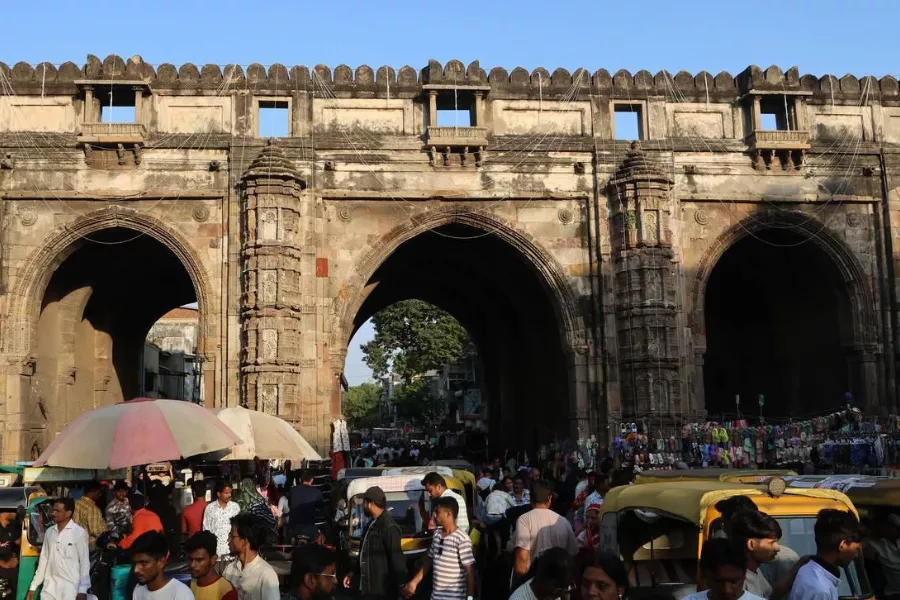
- Start with a cycle rickshaw ride through Chandni Chowk — a narrow, buzzing market street that has been trading for 400 years. Spice stalls, street food, fabric shops and silver jewellers line every lane. It is chaotic, colourful and genuinely fascinating.
- Visit Jama Masjid — India’s largest mosque, built by Emperor Shah Jahan in 1656. The courtyard holds 25,000 worshippers and the views over Old Delhi from the minarets are outstanding.
- Continue to Red Fort, the magnificent red-sandstone Mughal palace complex that served as the seat of imperial power for two centuries.
- Visit Raj Ghat, the peaceful riverside memorial to Mahatma Gandhi, set within serene gardens on the banks of the Yamuna.
New Delhi:
- Drive along Rajpath past India Gate and the grand government buildings designed by Edwin Lutyens during the British colonial period.
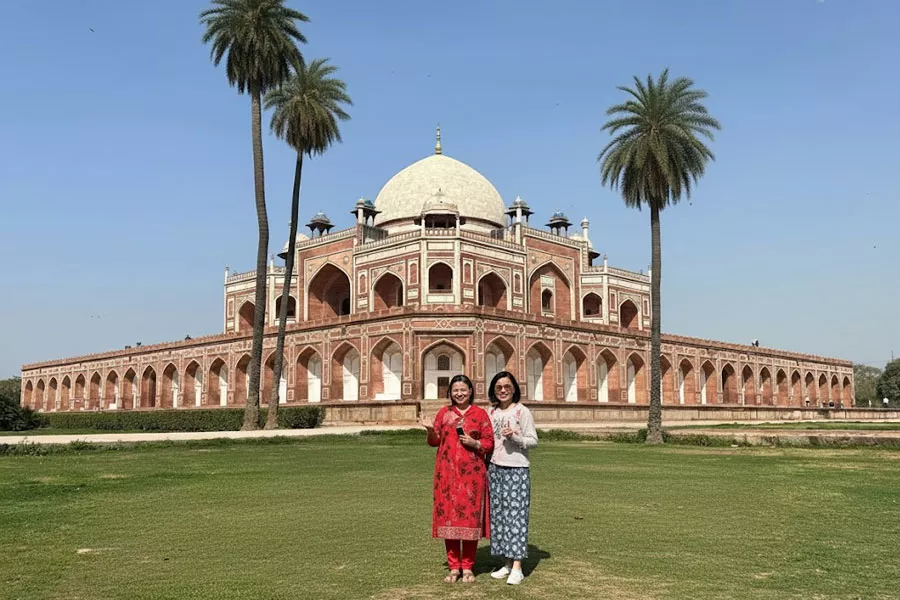
- Visit Humayun’s Tomb — the beautifully restored 16th-century Mughal mausoleum that directly inspired the design of the Taj Mahal. Less crowded, more peaceful, and architecturally extraordinary.
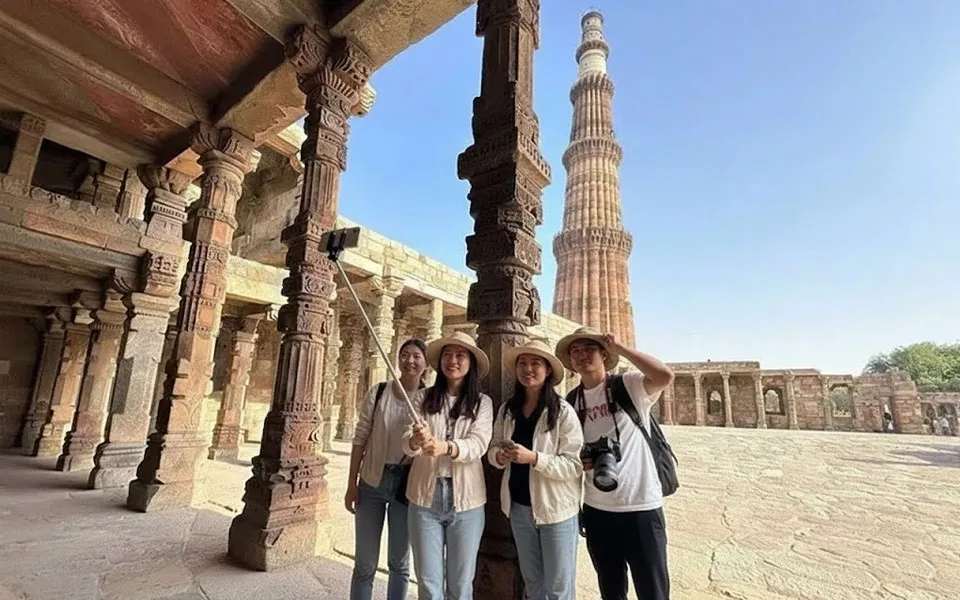
- Explore Qutub Minar — a UNESCO World Heritage Site and a 72-metre victory tower built in 1193, surrounded by ruins of India’s first mosque.
- Optional stop at Agrasen Ki Baoli, an ancient step-well popular with photographers for its dramatic symmetry and peaceful atmosphere.
Return to your hotel in the early evening. Dinner is at your discretion — your guide can recommend restaurants that match your preferences, whether that means a rooftop with a city view, a quiet neighbourhood bistro or an authentic Old Delhi food walk.
Overnight: Delhi
After breakfast, your driver picks you up and you head south on the Yamuna Expressway — a smooth, well-maintained highway that covers the 230 km to Agra in around 3 to 3.5 hours. The journey is comfortable, and the expressway makes this one of India’s most relaxed inter-city drives.
Agra was the capital of the Mughal Empire during its most powerful and creative period, and the monuments here reflect that extraordinary ambition. Your afternoon sightseeing covers:
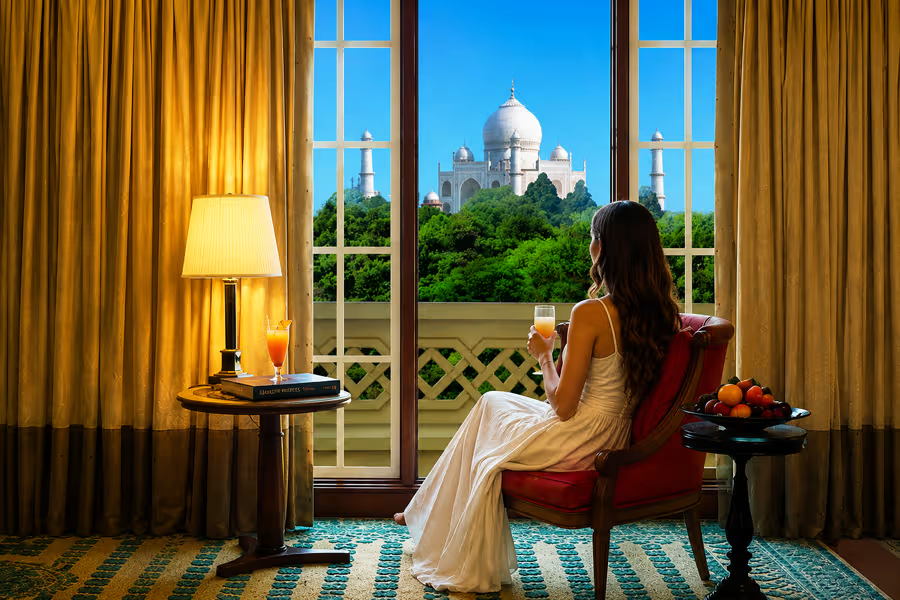
- Taj Mahal: The world’s most celebrated expression of love and one of humanity’s greatest architectural achievements. Built by Shah Jahan in memory of his wife Mumtaz Mahal, who died in childbirth in 1631, the Taj Mahal took 22 years and 20,000 workers to complete. Your private guide walks you through the formal gardens, the Great Gate, and the main tomb — sharing the history, the architectural detail, and the love story behind it. For couples, this is an experience with a very particular kind of resonance.
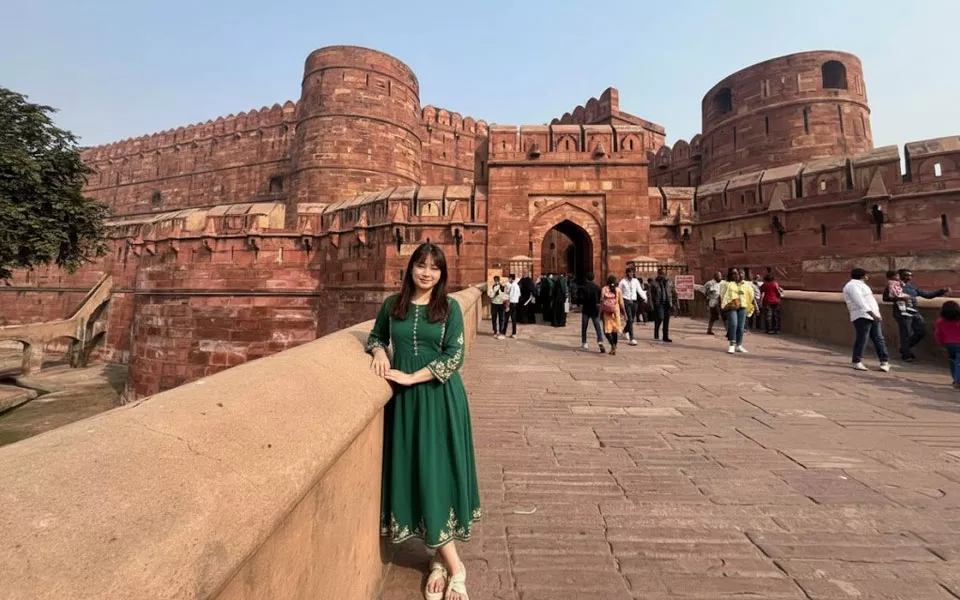
- Agra Fort: A massive red-sandstone Mughal fortress that served as the royal residence for Emperors Akbar, Jahangir and Shah Jahan. Inside, visit the Diwan-i-Khas, Jahangir’s Palace, and the Musamman Burj — the tower from which Shah Jahan, imprisoned by his own son, spent his final years gazing at the Taj Mahal across the river.
- Itmad-ud-Daulah (Baby Taj): A delicate white marble tomb built by Empress Nur Jahan for her father. Often called a draft of the Taj Mahal, it features intricate pietra dura stonework and sits in peaceful, uncrowded gardens — a perfect spot for quiet photography and reflection.
Check in to your Agra hotel in the early evening. If possible, request a room or dinner table with a Taj Mahal view — there is nothing quite like watching it change colour as the sun goes down.
Overnight: Agra (hotel on request)
Day 4 – Sunrise at the Taj Mahal → Fatehpur Sikri → Jaipur
Set your alarm early. This morning is one of the highlights of the entire trip.
You return to the Taj Mahal at sunrise — before the main crowds arrive — when the light is soft, golden and extraordinary. The marble changes colour as the sky brightens. The reflecting pools mirror everything above them. The silence inside the complex at this hour is something you will not forget. This is how the Taj Mahal is meant to be experienced, and it is worth every minute of the early start.
Return to the hotel for a relaxed breakfast and checkout, then your driver heads west towards Jaipur with two excellent stops along the way:
Fatehpur Sikri
-
(40 km from Agra): Emperor Akbar built an entire new Mughal capital here in red sandstone, occupied it for just 14 years, and then abandoned it — perfectly intact — when the water supply failed. Walking through the Buland Darwaza, the Panch Mahal and Akbar’s throne room with your guide, it feels almost impossible that a city this detailed and complete has been empty for five centuries.
Chand Baori, Abhaneri: One of the world’s most visually stunning step-wells — 13 storeys deep, with 3,500 narrow steps arranged in perfect geometric symmetry. Very few tourists detour here, which means you almost always have it to yourself. Photographers in the group will want significant time here.
You arrive in Jaipur in the late afternoon, check in to your hotel, and have the evening to explore the nearby area, visit the peaceful Birla Temple for sunset, or simply enjoy a quiet dinner after a full day on the road.
Note: The Taj Mahal is closed every Friday. If your travel dates include a Friday in Agra, we adjust the itinerary to ensure you do not miss the experience.
Overnight: Jaipur (hotel on request)
Jaipur is Rajasthan’s capital and one of India’s most visually striking cities. Its old walled city is painted in warm terracotta pink — a tradition dating to 1876 when Maharaja Sawai Ram Singh II had the city repainted to welcome the Prince of Wales. Today you explore the best of it with your private guide.
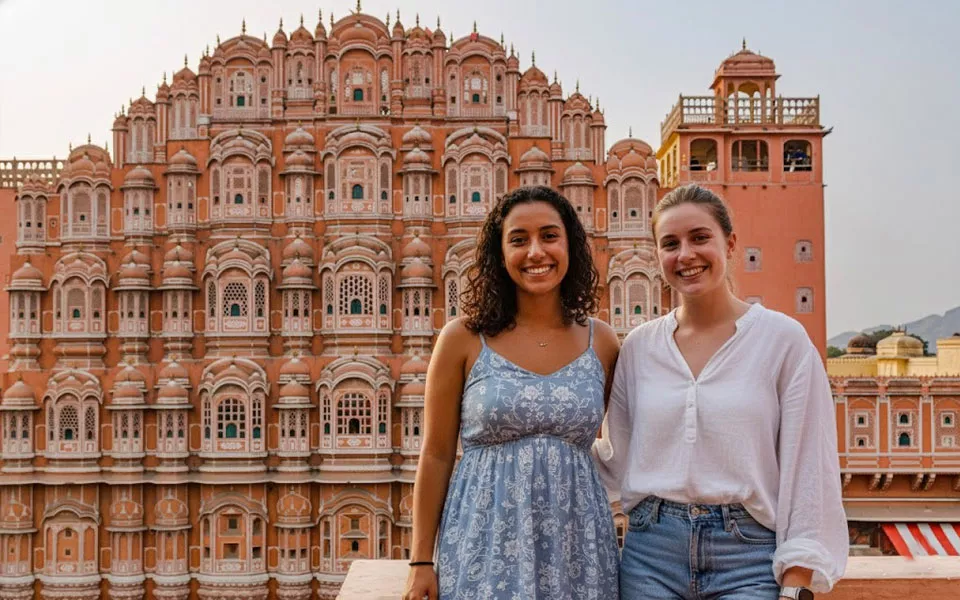
- Hawa Mahal (Palace of Winds): The iconic five-storey façade of 953 intricately latticed windows, built so the royal women could observe street life below without being seen. One of India’s most photographed buildings — best captured from the street opposite in the morning light.
- Jal Mahal (Water Palace): A small palace floating in the middle of Man Sagar Lake, best photographed from the lakeside promenade. Magical in the morning or late afternoon.
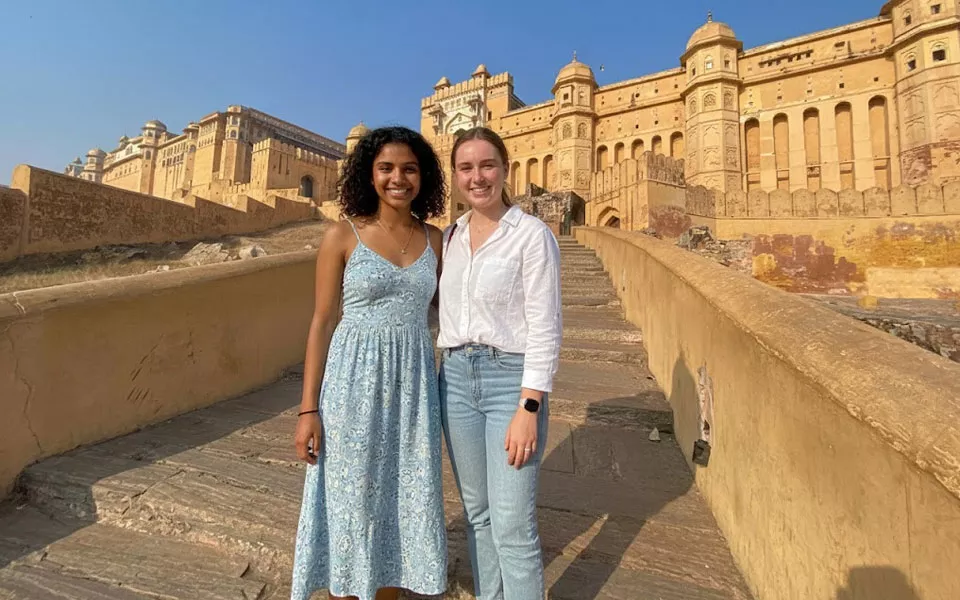
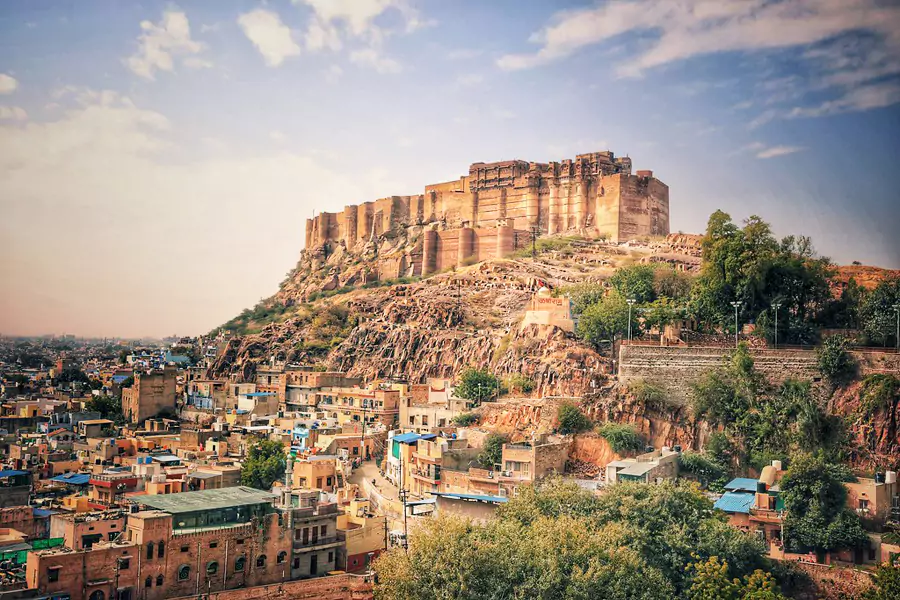
- Amber Fort: Jaipur’s most spectacular monument — a hilltop Rajput fort and palace complex that took over 100 years to build. Your guide walks you through the Sheesh Mahal (Hall of Mirrors), the Ganesh Pol gateway and the royal apartments, sharing the full story of the Kachhwaha rulers. The views from the ramparts over Maota Lake below are outstanding.
- City Palace: The royal residence of the Jaipur Maharaja family — still partially occupied today. The museum section holds an extraordinary collection of royal costumes, weapons, manuscripts and enormous silver urns that hold the Guinness World Record as the largest silver objects ever made.
- Jantar Mantar: A UNESCO World Heritage Site — the world’s largest stone astronomical observatory, built by Maharaja Jai Singh II in 1734. The massive stone instruments — some the size of buildings — still accurately measure time, track the sun’s position and predict eclipses. Your guide explains how they work in a way that makes this one of the most surprisingly fascinating stops on the entire tour.
- Albert Hall Museum: Jaipur’s oldest museum, housed in a stunning Indo-Saracenic building in the heart of Ram Niwas Garden. Its collection covers Rajasthani art, textiles, carpets, ivory carvings, pottery and an Egyptian mummy that consistently surprises visitors.
Spend the late afternoon exploring Jaipur’s vibrant markets — Johari Bazaar for Kundan-Meena jewellery and gemstones, Bapu Bazaar for block-printed fabrics and Jaipuri quilts, and the lanes near Hawa Mahal for lacquerware, blue pottery and miniature paintings. Your guide knows which shops offer genuine quality and fair pricing, and is completely free of any commission arrangements.
Return to your hotel for dinner and a well-deserved rest after a full, rich day.
Overnight: Jaipur
Today belongs entirely to you. This deliberately unscheduled day gives you the space to move through Jaipur at whatever pace feels right, whether that means revisiting a favourite part of the city, exploring something completely new, or spending a slow morning at the hotel before a relaxed afternoon out.
Some popular options for Day 6 in Jaipur — all of which we can arrange in advance or on the day:
Boutique shopping and artisan studios:
Jaipur has an outstanding independent retail scene beyond the main bazaars. Several boutique stores in Bani Park, C-Scheme and near Amber Fort specialise in high-quality block-printed textiles, sustainable fashion, handmade jewellery and contemporary Rajasthani craft. Your guide can recommend the best options based on your interests.
- >Spa and wellness: Most of Jaipur’s better hotels offer excellent spa facilities. A traditional Ayurvedic massage or a full-body treatment after days of sightseeing is genuinely restorative — and many travellers find Day 6 is the perfect moment for it.
- >Cooking class or food walk: Jaipur’s food culture is rich and distinctive — dal baati churma, laal maas, ghevar, pyaaz kachori. A private cooking class in a local home or a guided food walk through the old city gives you a completely different kind of cultural connection to the city.
- >Nahargarh Fort at sunset: If you did not make it here on Day 5, a sunset visit to Nahargarh Fort offers one of Rajasthan’s finest views — the entire city spread out below in the fading golden light. The fort also has a decent restaurant for a sundowner.
- >Stepwells and hidden architecture: Jaipur has several beautiful, undervisited step-wells — Panna Meena Ka Kund near Amber Fort is particularly photogenic and almost always uncrowded. A morning spent exploring these quieter corners of the city is very different from the main monument circuit and rewards photographers especially.
- >Elephant sanctuary visit: Several ethical elephant care facilities near Jaipur allow visitors to spend time with rescued elephants — feeding, bathing and walking with them in a responsible, welfare-focused environment. If this interests your group, let us know in advance and we will arrange it.
- In the evening, your guide can suggest Jaipur’s most welcoming restaurants and rooftop dining options — several of which are popular with international LGBTQ+ travellers for their relaxed, cosmopolitan atmosphere. End your last full evening in Rajasthan in a way that feels genuinely yours.
Overnight: Jaipur
Your final morning in Jaipur is easy and unhurried. Enjoy a leisurely breakfast at the hotel, take a last walk through the garden or a nearby lane, and pack at your own pace. Your driver collects you at the agreed time and transfers you to Jaipur Airport or the railway station for your onward journey.
If your international flight departs from Delhi, we include a domestic flight from Jaipur to Delhi as part of the package so you arrive at Indira Gandhi International Airport with comfortable connection time. If you prefer to travel by road or train, we arrange that too — just let us know your preference when booking.
Our team stays available by phone until you board. You leave with the Taj Mahal still vivid in your memory, the colours of Jaipur’s bazaars somewhere in your bag, and seven days of India that felt — from the very first pickup to the final goodbye — exactly as it should feel: personal, comfortable, and completely your own.
Inclusions:
- 6 nights accommodation in carefully selected, LGBTQ+-welcoming hotels in Delhi (2 nights), Agra (1 night) and Jaipur (3 nights) — room category on request
- Daily breakfast at all hotels throughout the tour
- Private air-conditioned car and driver for all transfers and sightseeing for all 7 days
- Vetted, professional driver with experience and sensitivity serving international LGBTQ+ guests
- Private English-speaking Driver and guides in Delhi, Agra and Jaipur
- Old Delhi cycle rickshaw ride through Chandni Chowk
Exclusions:
- International flights to and from India
- Domestic flight from Jaipur to Delhi on Day 7
- Monument and fort entry fees across all three cities
- Camera and video charges inside monuments where applicable
- Lunch and dinner (except daily breakfast)
- Optional activities not specified in the itinerary — cooking classes, elephant sanctuary, spa, hot-air balloon, etc.
- Personal expenses — shopping, laundry, minibar, phone calls, etc.