



There’s something almost magical about Agra — a city that holds centuries of history within its red sandstone walls and white marble domes. It’s not just another stop on the tourist map; it’s a place where time slows down, where romance and empire intertwine, and where travelers from around the world gather to witness one of the greatest symbols of love — the Taj Mahal.
Agra is part of India’s iconic Golden Triangle Tour, which connects Delhi, Jaipur, and Agra — each city offering its own distinct charm. While many travelers prefer guided tour packages, others crave the joy of discovering Agra at their own pace. If you belong to the latter group, this detailed guide will help you plan the perfect Agra day trip from Delhi filled with history, architecture, local flavors, and insider tips.
Getting to Agra from Delhi
The best part about Agra is how easily accessible it is from the capital. It’s only about a 2-hour journey from Delhi, making it an ideal day-trip destination. You can reach Agra by road or hop on one of the express trains that run frequently throughout the day.
If you’re an early riser, take the Gatimaan Express, which leaves Delhi around 6 a.m. and reaches Agra before 8 a.m. — just in time to catch the first light on the Taj Mahal. Visiting early also means you’ll avoid the crowds and capture that soft golden glow that photographers dream about.
The most pleasant months to visit Agra are November to March, when the weather is cool and perfect for sightseeing. From April to June, the sun becomes harsh, with temperatures soaring beyond 45°C. Monsoon months (July–August) bring some relief but can make travel within the city tricky due to traffic jams and waterlogging.
Travel Tips for a Smooth Agra Day Trip
Agra is a treasure trove of history, but its infrastructure can be overwhelming for first-time visitors. To make your journey stress-free, here are a few helpful tips:
- Hire a full-day taxi — It usually costs around USD 50 for 12 hours, and your driver will know all the shortcuts and best routes.
- Arrange a hotel pick-up if you’re arriving by train — most hotels provide this service.
- Keep an eye on your belongings, especially in crowded areas like the Taj Mahal entrances and Agra Fort.
- Book a licensed tour guide — They don’t just share facts; they narrate fascinating stories about Mughal kings, queens, and hidden chambers that bring these monuments to life.
- Pack essentials — sunscreen, sunglasses, a hat, and comfortable shoes are a must.
- Dress modestly, especially women travelers, as Agra is more conservative than Delhi.
- Plan ahead — Trains and hotels can get fully booked during peak season, so make reservations early.
- Remember: Taj Mahal and Fatehpur Sikri remain closed on Fridays.
One-Day Itinerary: The Best Way to Explore Agra
8:00 AM – Experience Sunrise at the Taj Mahal
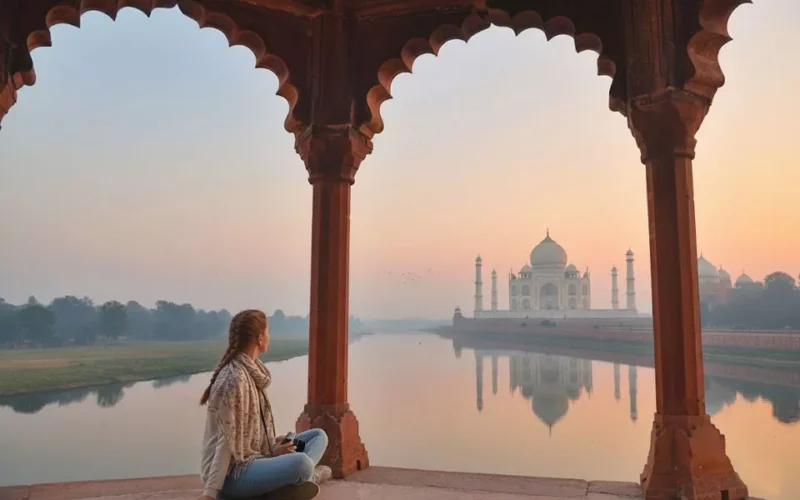
As the first rays of dawn light up the horizon, the Taj Mahal emerges like a dream from the mist — pure, poetic, and impossibly beautiful. No photograph can truly capture its magic. Built by Emperor Shah Jahan in memory of his beloved wife Mumtaz Mahal, this white marble mausoleum stands as a timeless ode to love.
From Agra Cantt Station, it’s about a 15-minute drive to the Taj complex. Most taxis drop visitors near the Purani Mandi Gate, from where you can either walk, hop on a battery-powered rickshaw, or take a charming horse-drawn carriage for around $5 USD.
As you pass through the gates and catch your first glimpse of the monument framed by Mughal arches, you’ll understand why the Taj Mahal is not just a monument — it’s a feeling.
Take your time strolling through the lush gardens, admiring the perfect symmetry, and feeling the cool marble beneath your feet. Inside, you’ll find the tombs of Mumtaz Mahal and Shah Jahan, beautifully carved and resting in eternal peace.
Quick Facts:
- Tickets: ₹40 (Indians), ₹1,100 (Foreigners)
- Tour guide: ₹250 for Indians / ₹800–1,000 for foreigners
- Time required:5–2 hours
- Tip: Vendors may approach you persistently; a polite “no, thank you” usually works best.
10:30 a.m. – Explore the Mighty Agra Fort
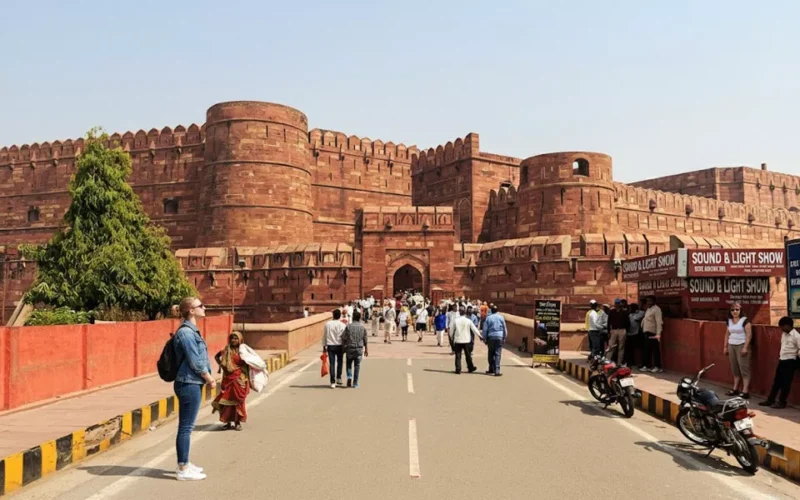
Just a 10-minute drive from the Taj Mahal stands the Agra Fort, another architectural wonder and a UNESCO World Heritage Site. Built in red sandstone by Emperor Akbar and later modified by his grandson Shah Jahan, this fort is a perfect blend of strength and elegance.
Wandering through its massive gates and marble chambers, you’ll encounter tales of royal intrigue of emperors imprisoned by their sons, secret meetings, and love stories that shaped Indian history. From the fort’s balconies, you can catch a distant glimpse of the Taj Mahal across the Yamuna, framed like a dream.
Ticket price: ₹40 (Indians) / USD 9 (foreigners)
Guide cost: ₹250 (Indians) / USD 10 (foreigners)
Time required: 1.5 – 2 hours
Tip: The fort is sprawling — wear good walking shoes and hire a guide to make the most of your visit. They’ll share stories hidden in the stone walls that no signboard could ever tell
12:30 PM – Lunch at Pinch of Spice

After a morning steeped in history, treat yourself to a relaxing lunch at Pinch of Spice, one of Agra’s most popular restaurants. The interiors are modern, the service is friendly, and the food is a delightful mix of Indian and international flavors.
If you’re new to Indian cuisine, start with mild curries and fresh naan — but don’t hesitate to ask the staff about spice levels! For vegetarians, their paneer tikka and dal makhani are local favorites.
The restaurant’s location is convenient, close to both the Taj and Agra Fort, making it an ideal mid-day stop to refuel and refresh.
1:30 PM – Visit the Enchanting Fatehpur Sikri
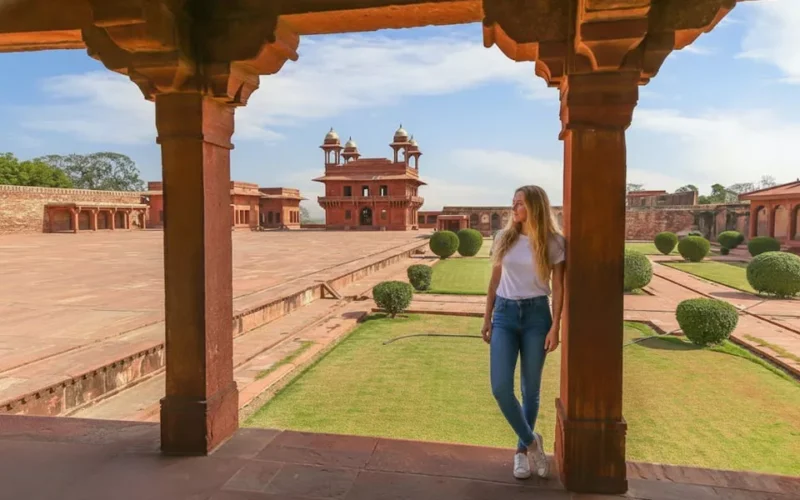
After lunch, embark on a one-hour drive (about 40 km) to the ancient fortified city of Fatehpur Sikri, once the grand capital of Emperor Akbar. Though it was abandoned after just 13 years due to water scarcity, its beauty remains untouched by time.
The complex is divided into two parts — the mosque area and the palace grounds. Start your visit at Buland Darwaza, the world’s tallest gateway, and then explore Jodha Bai’s Palace, Birbal Bhawan, Panch Mahal, and Diwan-i-Khas — each an architectural masterpiece blending Hindu, Islamic, and Persian styles.
Quick Facts:
- Tickets: ₹40 (Indians), ₹610 (Foreigners)
- Guide cost: ₹250–₹500
- Time required: 2–2.5 hours
- Tip: The site is massive. Hire a licensed guide to make sense of its layout and stories — and don’t forget your walking shoes!
6:00 PM – Sunset at Mehtab Bagh or Boat Ride on the Yamuna
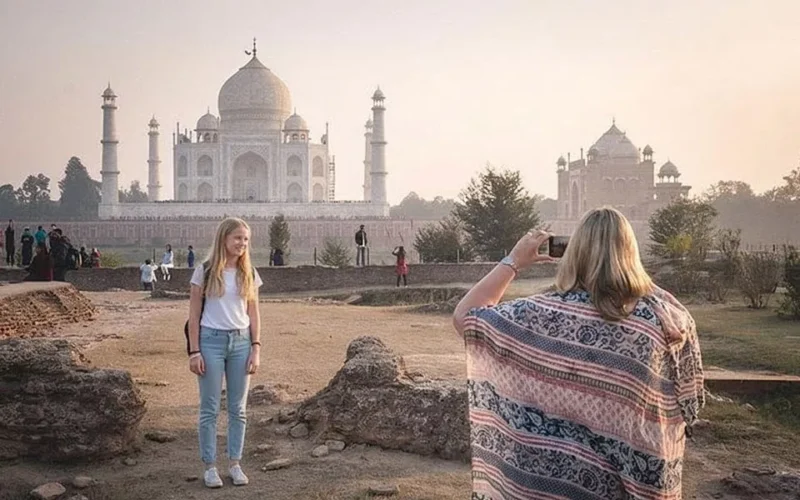
As your day winds down, there’s no better way to end your Agra adventure than with a sunset view of the Taj Mahal from across the Yamuna River. Head to Mehtab Bagh, a serene Mughal garden that aligns perfectly with the Taj. Watching the monument turn golden and pink under the setting sun is pure poetry.
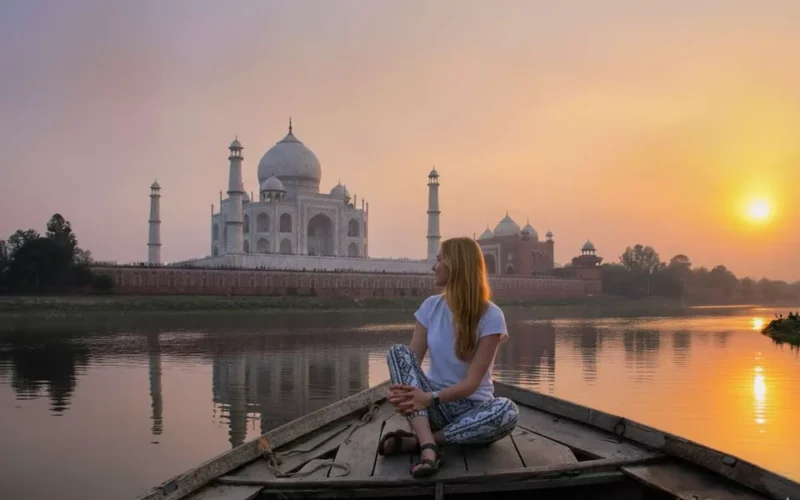
For something a bit more intimate, take a boat ride on the Yamuna River from Dussehra Ghat, near the Taj’s West Gate. The gentle rhythm of the water, the evening breeze, and the sight of the Taj reflected in the river create a moment that feels almost sacred.
Quick Facts:
- Mehtab Bagh Ticket: ₹15 (Indians), ₹250 (Foreigners)
- Boat Ride: Around ₹300 (Indians), $10 USD (Foreigners)
- Best time: 5:30–6:30 PM
8:00 PM – Return to Delhi (or Stay Overnight)
By now, your heart is full, your camera is bursting with memories, and your mind is lost in Mughal daydreams. You can easily catch a return train to Delhi or spend a peaceful night in Agra before heading out the next morning.
If you decide to stay, consider Hotel Prema Palace — centrally located, clean, comfortable, and budget-friendly.
Final Thoughts – Agra: A Journey Through Time and Emotion
A day trip to Agra is not just about ticking off the Taj Mahal from your bucket list — it’s about stepping into a story that has lived for centuries. From the morning mist that wraps the marble dome to the warm glow of the evening sun over the Yamuna, every moment feels like a scene from an ancient love poem.
Agra may test your patience with its crowds and chaos, but it will reward you with beauty, history, and emotion in equal measure. Because once you’ve stood before the Taj Mahal — no matter who you are or where you come from a part of you will always remain there, etched forever in marble and memory.