


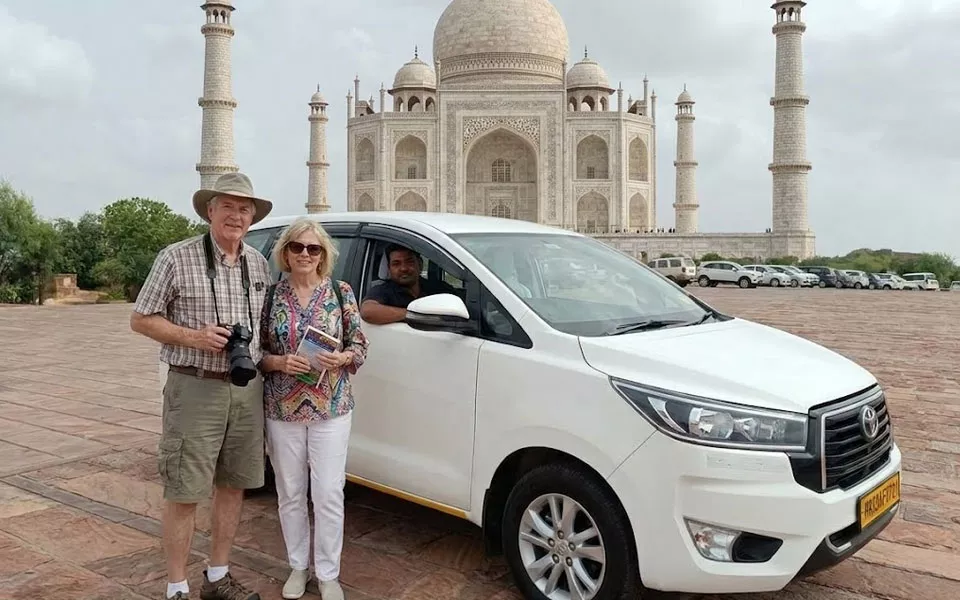
Planning a Golden Triangle tour through Delhi, Agra, and Jaipur demands smart choices in transportation that elevate your journey from ordinary to extraordinary. These classic routes stretch 700–1,000 kilometers across bustling cities, high-speed expressways like the Yamuna Expressway, and occasional rural detours filled with vibrant villages and unexpected speed bumps. Private vehicles with seasoned drivers offer unmatched freedom—you pause for roadside chai, chase Taj Mahal sunrises without fixed schedules, and weave through Jaipur’s chaotic bazaars effortlessly. This in-depth guide compares sedans, SUVs, and Tempo Travellers side by side, shares insider road insights, cost ranges, and sample itineraries so you can select the best car for your group size, comfort needs, and travel style on India’s most iconic circuit.
Experienced operators always focus on powerful air-conditioning, clean interiors, and reliable mechanics to handle summer heat above 40°C, dusty winds, and unpredictable monsoon showers. Many travelers do not realize how vehicle height changes your view of Amber Fort’s ramparts or how luggage space affects your shopping freedom in Agra’s marble markets. The sections below explain everything clearly so you avoid common mistakes like choosing a small sedan for a large family or paying too much for a big van when you travel as a couple.
Essential Factors Before You Choose a Car
Several practical factors influence which vehicle works best for your Golden Triangle tour:
- Road type: Mix of smooth highways, city traffic, and occasional rough patches near monuments and villages.
- Distance: Usually 700–1,000 km over 3–5 days, with 3–6 hours of driving on many days.
- Group size: Couples, small families, or big groups all have different comfort needs.
- Luggage: Number of suitcases, shopping plans, and camera bags matter.
- Budget: Per-day and per-person cost should feel fair and transparent.
- Comfort: Legroom, seat reclining, air-conditioning, and ride quality on longer stretches.
When you balance these points, it becomes much easier to decide between a sedan, SUV, or Tempo Traveller.
Sedans: Agile and Affordable for Couples and Solos
Sedans work best for:
- Solo travelers and couples.
- Small families of up to 3 passengers with light or medium luggage.
- Travelers who want a budget-friendly, fuel-efficient option.
Sedans deliver zippy, cost-effective rides for 1–3 passengers plus light luggage. They shine on expressways where they move quickly and smoothly, and they handle city traffic with ease. Toyota Etios and Maruti Swift Dzire are among the most popular choices for Golden Triangle tours because they offer:
- Good fuel efficiency (around 18–22 km/l in normal conditions).
- Comfortable seating for 2–3 passengers.
- A boot that fits around 2 large suitcases plus a couple of small bags.
Couples appreciate how easy it is to park sedans in busy areas like Chandni Chowk or near city markets, and how quiet the cabin feels on long highway drives.
Recommended Sedan Models
- Toyota Etios– Spacious interior, reliable engine, ABS brakes, and stable handling on highways. It works very well for Delhi to Agra and Agra to Jaipur legs when you travel light.
- Maruti Swift Dzire– Compact, agile, and very fuel-efficient. Ideal if you plan more city sightseeing and shorter drives each day.
Typical Sedan Pricing and Limitations
- Approximate rental range for a 3–4 day Golden Triangle tour:
- Around ₹11–15 per km, or
- Roughly ₹11,000–16,000 for the full circuit (depending on season, exact distance, and inclusions).
- Usually includes: Driver, fuel in some plans, basic tax, and parking at standard spots.
Main limitations:
- Lower ground clearance can be uncomfortable on broken patches, deep speed breakers, or village roads.
- Limited luggage space can become a problem if 3 adults travel with large suitcases and heavy shopping.
If you travel as a couple or solo with 1–2 large bags, a sedan is usually the most economical and comfortable choice.
SUVs: Powerhouse Comfort for Families of 4–6
SUVs are ideal for:
- Families and small groups of 3–6 people.
- Travelers who want more legroom and better comfort on bumpy sections.
- Those carrying more luggage or planning to shop a lot on tour.
SUVs offer more space, better suspension, and higher ground clearance than sedans. They balance comfort and performance across the different road types of the Golden Triangle. Popular choices include Toyota Innova and Toyota Innova Crysta.
Why SUVs Work So Well on the Golden Triangle
- Higher seating position gives better visibility of forts, palaces, and countryside.
- Extra legroom and wider seats reduce fatigue on 4–6 hour drives.
- Ground clearance (around 180–200 mm) handles potholes, speed bumps, and rough detours easily.
- Large boot can handle 3–4 big suitcases plus hand luggage without making the cabin feel crowded.
Families with children and mixed-age groups often find SUVs the most comfortable option, especially on the Agra–Jaipur stretch, which can be tiring in a smaller car.
Standout SUV Models
- Toyota Innova– Extremely popular for long tours. It combines durability, strong air-conditioning, good suspension, and reliable performance in heat and dust.
- Toyota Innova Crysta– A more premium version with options like captain seats, refined interiors, and an even smoother ride on highways.
Typical SUV Pricing and Considerations
- Approximate rental range for a 3–4 day Golden Triangle tour:
- Around ₹17–25 per km, or
- Roughly ₹16,000–24,000 for the full circuit (depending on distance, hotel pickups, and inclusions).
Main points to note:
- Fuel efficiency is lower than sedans, usually around 12–15 km/l.
- Overall cost is higher, but when you split it among 4–6 people, the per-person cost still feels reasonable.
If you travel as a family or small group and want a balance of comfort, view, and safety, an SUV usually becomes the best-value option.
| Feature | Sedan (Etios/Dzire) | SUV (Innova/Crysta) | Tempo Traveller (12-20 Seater) |
|---|---|---|---|
| Capacity | 1–3 passengers + driver | 3–6 passengers + driver | 7–20 passengers + driver |
| Luggage | 2 large + 2 small | 3–4 large + extras | 10+ suitcases, separate boot |
| Cost (per km) | ₹12–15 | ₹17–25 | ₹22–27 |
| Fuel Efficiency | 18–22 km/l | 12–15 km/l | 8–10 km/l |
| Road Handling | Excellent on highways, weak on potholes | High ground clearance, versatile | Stable for groups, wider turns |
| Best For | Couples, solo travelers, budget trips | Families, comfort-focused travelers | Large groups, events, group tours |
Tempo Travellers: Ultimate Group Vans for 7 or More
Tempo Travellers are perfect for:
- Larger families, friend groups, student groups, or small corporate teams.
- 7–20 passengers who want to travel together in one vehicle.
- Travelers who prefer more walking space, headroom, and storage.
Tempo Travellers function like mini-buses with better comfort and amenities than local buses. They transform long Golden Triangle drives into social time where everyone can chat, play music, or simply relax.
What Makes Tempo Travellers Ideal for Groups
- Seating capacity from 9 to 20 seats depending on the model.
- Pushback seats with armrests and good legroom for long journeys.
- Entertainment features like music systems, sometimes TV screens, and charging points.
- Separate luggage space at the rear that fits many suitcases without blocking the aisle.
On sections like Jaipur to Delhi, a Tempo Traveller lets big groups stay together, instead of splitting into multiple cars.
Popular Tempo Traveller Options
- 12-Seater Tempo Traveller– Great for extended families and medium groups. Offers comfortable seats, air-conditioning, and space for a lot of luggage.
- 17–20 Seater Deluxe Tempo Traveller– Best for larger groups, with wide aisles, overhead racks, and sometimes curtains for privacy.
Typical Tempo Traveller Pricing and Trade-offs
- Approximate rental range for Golden Triangle tours:
- Around ₹22–27 per km, with an average around ₹24 per km.
- Total cost for a 3–4 day tour often starts around ₹24,000 and goes higher with distance and group size.
When you divide this by 10–15 people, the per-person cost stays very reasonable.
Things to consider:
- Larger size means slower movement in narrow lanes and tight parking areas.
- Turning radius is wider, so it needs an experienced driver, especially in old city areas.
For groups of 7 or more, a Tempo Traveller usually offers the best combination of budget, comfort, and shared fun.
Sedan vs SUV vs Tempo Traveller: At a Glance
This quick comparison helps you match your group’s size and expectations with the right category of vehicle.
How Each Vehicle Handles Golden Triangle Roads
The Golden Triangle offers:
- Smooth, fast expressways (like Delhi–Agra).
- Mixed city and rural roads (Agra–Jaipur, Jaipur–Delhi).
Sedans
- Perform best on expressways and smooth city roads.
- Less comfortable on rough stretches or high speed breakers.
SUVs
- Handle almost all sections comfortably due to better suspension and higher clearance.
- Ideal if you expect some village detours or want to stop at lesser-known spots.
Tempo Travellers
- Built to handle long distances with many passengers.
- Require more care in old city lanes, but experienced drivers manage this easily.
All three should have strong air-conditioning, especially in summer months, and good tyres to handle occasional heavy rain during the monsoon.
Pricing Overview for a 4-Day Golden Triangle Tour
Exact prices vary by season, inclusions, and operator, but you can use these rough ranges as a guide:
- Sedan
- Around ₹11,000–16,000 for 3–4 days plus any extra charges.
- SUV
- Around ₹16,000–24,000 total for 3–4 days.
- Tempo Traveller (around 12-seater)
- Around ₹24,000 or more for 3–4 days, but per-person cost stays low for big groups.
Sometimes packages include fuel, tolls, driver allowance, and parking. In other cases, fuel and tolls stay separate. Always confirm inclusions in advance.
4-Day Golden Triangle Itinerary by Vehicle Type
Day 1: Delhi Sightseeing
- Visit India Gate, Qutub Minar, Lotus Temple, and markets.
- Sedans are great here because they move easily through traffic and fit into smaller parking spots.
- SUVs and Tempo Travellers also work, especially for families and groups.
Day 2: Delhi to Agra
- Drive about 3–4 hours on the expressway.
- Stop at the Taj Mahal, Agra Fort, and nearby viewpoints.
- SUVs and sedans both feel comfortable; groups enjoy Tempos with space to relax.
Day 3: Agra to Jaipur
- Distance around 230–250 km, with optional stop at Fatehpur Sikri.
- Roads can be a mix of good stretches and rough patches.
- SUVs and Tempo Travellers handle this route very well; sedans are fine but may feel bumps more.
Day 4: Jaipur to Delhi
- Visit Amber Fort, City Palace, Hawa Mahal in the morning if you did not finish them earlier.
- Later, drive back to Delhi with optional stops for food and shopping.
- Any of the three vehicle types can manage this route depending on your group size.
Practical Tips Before You Book Your Car
- Choose the vehicle based on people and luggage, not just price.
- For 1–3 people, a sedan usually works best unless you carry heavy luggage.
- For 3–6 people, an SUV gives you the ideal mix of comfort and flexibility.
- For 7 or more, a Tempo Traveller keeps your group together and reduces per-person cost.
- Confirm air-conditioning, model year, and basic safety features (seatbelts, ABS if possible).
- Check what is included: fuel, tolls, state taxes, parking, and driver night charges.