


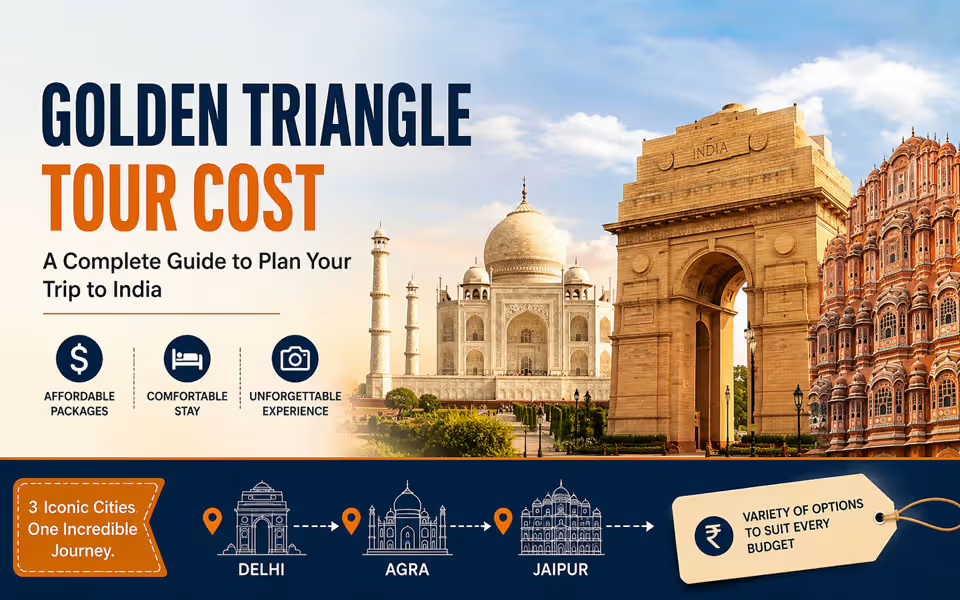
Every year, hundreds of thousands of international travelers land in India with one question at the top of their planning list: how much does a Golden Triangle tour actually cost?
It is a fair question. The Golden Triangle is India’s most popular tourist route. Delhi, Agra, and Jaipur together form a loop that covers the country’s most iconic monuments, its most celebrated Mughal architecture, its most vibrant bazaars, and some of its finest cuisine. For a first-time visitor to India, this route offers the clearest, most rewarding introduction to everything the country has to offer.
But the Golden Triangle tour cost is not a fixed number. It varies widely depending on how you choose to travel, where you choose to sleep, how many days you have, and whether you want a bare-bones budget experience or a fully curated luxury journey. Understanding how the pricing works helps you plan a trip that genuinely fits your expectations — not just your budget.
This guide breaks down the complete cost of a Golden Triangle tour for 2026 across three trip durations (3 days, 5 days, and 7 days), three travel styles (budget, mid-range, and luxury), and every major expense category — hotels, private car and driver, monument entry fees, food, and additional experiences. By the end, you will have a clear and honest picture of what to expect.
What Is the Golden Triangle Tour?
The Golden Triangle is a travel route that connects three of India’s most historically significant cities — Delhi (the national capital), Agra (home of the Taj Mahal), and Jaipur (the Pink City of Rajasthan). The three cities form a rough triangle on the map of northern India, hence the name.
Delhi to Agra covers approximately 230 kilometres. Agra to Jaipur is about 235 kilometres. Jaipur back to Delhi is around 270 kilometres. The entire loop totals roughly 720 kilometres, a manageable circuit that can be completed in as few as three days or as comfortably as seven, depending on how deeply you want to explore each destination.
For foreign tourists visiting India for the first time, the Golden Triangle covers everything that defines the country’s identity as a travel destination — Mughal architecture, Rajput forts, royal palaces, street food, handicraft markets, rickshaw rides, and ancient temples — all within a single, connected journey.
What Shapes the Golden Triangle Tour Cost?
Before looking at specific numbers, it helps to understand the five main cost categories that together define your Golden Triangle tour budget.
- Accommodation
Hotels across the Golden Triangle range from clean, comfortable budget guesthouses at $25 to $40 per night to heritage palace hotels and five-star properties that charge $400 to $800 per night. The category you choose has the single biggest impact on your overall trip cost. - Private Car and Driver
Most foreign travelers choose to hire a private car and driver for the Golden Triangle tour rather than navigating trains, buses, or shared taxis. A private vehicle gives you complete flexibility, door-to-door service, and the ability to stop whenever and wherever you want. This is typically the second biggest cost in the budget. - Monument Entry Fees
Foreign tourists pay significantly higher entry fees at India’s protected monuments compared to domestic visitors. The Taj Mahal alone charges foreign visitors INR 1,300 (approximately $15 to $16 at current exchange rates). Budget separately for each major site you plan to visit. - Food and Dining
Food costs vary enormously. A complete meal at a local dhaba or mid-range restaurant costs $5 to $15 per person. A dinner at a rooftop restaurant with views of the Taj Mahal or a heritage hotel dining room costs $30 to $80 per person. Most travelers find that food is one of the easiest costs to control. - Experiences, Activities, and Shopping
Guided tours, elephant sanctuary visits, cooking classes, craft workshops, and cultural performances add meaningfully to both the trip’s cost and its quality. Budget a separate allowance for these depending on your interests.
Golden Triangle Tour Cost for 3 Days
A 3-day Golden Triangle itinerary is fast-paced but completely achievable for travelers with limited time. On Day 1 you cover Delhi’s highlights, Day 2 you drive to Agra and visit the Taj Mahal and Agra Fort, and Day 3 you drive to Jaipur and return to Delhi. The distances are long, the pace is brisk, but the highlights are all covered.
The 3-day Golden Triangle tour cost depends almost entirely on your accommodation and transport choices. Budget travelers moving efficiently can manage the trip for a relatively low total, while travelers who choose premium hotels and a luxury vehicle will spend considerably more.
3-Day Cost Breakdown (Per Person, Based on 2 Travelers)
| Category | Budget | Mid-Range | Luxury |
|---|---|---|---|
| Hotel (2 nights) | $66 | $165 | $440+ |
| Private Car and Driver | $132 | $220 | $330+ |
| Food (all meals, 3 days) | $44 | $88 | $165 |
| Entry Fees | $44 | $66 | $88 |
| Total Per Person | $275 – $495 | $550 – $990 | $1,320+ |
Budget 3-Day Trip: Staying in clean mid-budget guesthouses, eating at local restaurants, traveling in a standard sedan, and limiting experiences to the main monuments. Expect to spend $275 to $495 per person.
Mid-Range 3-Day Trip: Comfortable hotels with breakfast, a private AC sedan or SUV, guided monument tours, and a couple of sit-down meals at well-reviewed restaurants. Expect to spend $550 to $990 per person.
Luxury 3-Day Trip: Heritage hotels or 5-star properties in all three cities, a luxury SUV or chauffeur-driven vehicle, private certified guides at each monument, and fine dining. Expect to spend $1,320 or more per person.
Golden Triangle Tour Cost for 5 Days
Five days is the most recommended duration for a first-time visit to the Golden Triangle. It gives you a full day in Delhi, a dedicated day for the Taj Mahal and Agra, a day to drive between cities and explore en route, and two full days in Jaipur — enough time to see Amber Fort, the City Palace, Hawa Mahal, Jantar Mantar, and still have an afternoon for the bazaars. The pace is comfortable and the experience is complete.
The 5-day Golden Triangle tour cost adds the additional hotel nights and driver days, but the per-day rate actually improves because fixed costs like the vehicle are spread over a longer journey.
5-Day Cost Breakdown (Per Person, Based on 2 Travelers)
| Category | Budget | Mid-Range | Luxury |
|---|---|---|---|
| Hotel (4 nights) | $132 | $385 | $1,100+ |
| Private Car and Driver | $220 | $385 | $660+ |
| Food (all meals, 5 days) | $88 | $165 | $330 |
| Entry Fees | $66 | $88 | $132 |
| Total Per Person | $440 – $770 | $880 – $1,540 | $1,980+ |
Budget 5-Day Trip: Budget-friendly but clean accommodation, local food, a standard AC car, and self-guided or audio-guided monument visits. Expect to spend $440 to $770 per person.
Mid-Range 5-Day Trip: Boutique hotels or well-reviewed 3 to 4-star properties with breakfast, private guided tours at key sites, an SUV like a Toyota Innova, and a mix of local and restaurant dining. Expect to spend $880 to $1,540 per person.
Luxury 5-Day Trip: Palace hotels such as The Oberoi Amarvilas Agra or Rambagh Palace Jaipur, a luxury vehicle, private expert guides, elephant sanctuary experiences in Jaipur, spa access, and premium dining. Expect to spend $1,980 or more per person.
Golden Triangle Tour Cost for 7 Days
Seven days on the Golden Triangle turns a sightseeing trip into a genuine immersion. With an extra two days added to the 5-day framework, you have space for experiences that shorter itineraries miss entirely — a morning at Fatehpur Sikri on the road from Agra, a cooking class with a Jaipur local, a sunrise at the Taj Mahal before the crowds arrive, a village excursion near Delhi, or a half-day at a traditional block printing workshop in Sanganer. Seven days lets the journey breathe.
The 7-day Golden Triangle tour cost is the most value-for-money option per day, as the fixed costs are distributed over a longer trip while the daily experience deepens considerably.
7-Day Cost Breakdown (Per Person, Based on 2 Travelers)
| Duration | Budget (Per Person) | Mid-Range (Per Person) | Luxury (Per Person) |
|---|---|---|---|
| 3 Days | $275 – $495 | $550 – $990 | $1,320+ |
| 5 Days | $440 – $770 | $880 – $1,540 | $1,980+ |
| 7 Days | $660 – $1,100 | $1,320 – $2,420 | $2,750+ |
Budget 7-Day Trip: Comfortable budget travel with clean accommodation, local food, standard AC sedan, and independent sightseeing at most monuments. Expect to spend $660 to $1,100 per person.
Mid-Range 7-Day Trip: A well-curated itinerary with boutique hotels, a private SUV, guided tours, curated food experiences, and a mix of planned activities. Expect to spend $1,320 to $2,420 per person.
Luxury 7-Day Trip: Flagship 5-star properties throughout, a premium vehicle with a professional chauffeur, fully private guided tours with expert historians, exclusive access experiences, and a bespoke daily programme. Expect to spend $2,750 or more per person.
Cost of Private Car and Driver for Golden Triangle Tour
Hiring a private car and driver is by far the most popular choice for foreign travelers on the Golden Triangle route, and for very good reason. A private vehicle gives you complete control over your schedule. You are not dependent on train timetables, you are not sharing space with strangers, and your driver becomes your on-the-ground support — handling logistics, navigating city traffic, recommending stops, and making the whole journey significantly less stressful.
The cost of a private car and driver depends on the vehicle type you choose.
Private Car Daily Rate (Per Day, USD)
| Vehicle Type | Daily Cost (USD) |
|---|---|
| Standard Sedan (Swift Dzire, Honda City) | $44 – $66 |
| SUV (Toyota Innova Crysta) | $66 – $99 |
| Luxury SUV (Toyota Fortuner, Innova HyCross) | $110 – $165 |
| Premium Luxury (Mercedes, BMW) | $165 – $250+ |
For a 3-day trip, the total driver cost using an SUV ranges from $198 to $297. For a 5-day trip, the same vehicle costs $330 to $495. For 7 days, budget $462 to $693 for a standard SUV.
What to Look for in a Golden Triangle Driver:
- Fluent English communication for easy interaction and real-time guidance
- Clean, well-maintained vehicle with working air conditioning
- Experience with foreign travelers and knowledge of monument locations, parking, and local etiquette
- Availability for early morning starts (Taj Mahal sunrise visits require a 5 AM pickup)
- A flexible approach to the itinerary so you can adjust plans without friction
A good private driver is not just a vehicle operator. On the Golden Triangle, your driver spends more time with you than any guide, and the quality of that person shapes your entire experience of the journey.
Hotel Costs Across Delhi, Agra, and Jaipur
Accommodation costs vary by city as well as by category. Here is a realistic guide to what to expect in each destination.
Delhi Hotel Cost Per Night (USD)
| Category | Price Range |
|---|---|
| Budget Guesthouse | $22 – $44 |
| Mid-Range (3-4 Star) | $66 – $165 |
| Luxury (5-Star / Heritage) | $220 – $550+ |
Delhi has the widest range of accommodation options of the three cities. Mid-range properties in South Delhi and the Aerocity area offer excellent value. Luxury travelers often choose The Imperial, The Leela, or Taj Mahal Hotel.
Agra Hotel Cost Per Night (USD)
| Category | Price Range |
|---|---|
| Budget Guesthouse | $22 – $44 |
| Mid-Range (3-4 Star) | $77 – $187 |
| Luxury (Taj View / 5-Star) | $330 – $880+ |
Agra’s most sought-after hotels are those with Taj Mahal views, particularly The Oberoi Amarvilas, which offers unobstructed views of the monument from every room and is consistently ranked among the finest hotels in Asia.
Jaipur Hotel Cost Per Night (USD)
| Category | Price Range |
|---|---|
| Budget Guesthouse | $22 – $44 |
| Mid-Range (Boutique / 3-Star) | $66 – $176 |
| Luxury (Heritage Palace) | $220 – $660+ |
Jaipur has some of the most character-rich accommodation in India. Heritage palace hotels converted from former royal residences offer an experience you cannot find anywhere else in the world. Rambagh Palace, Samode Palace, and Alsisar Haveli are among the most celebrated.
Monument Entry Fees for Foreign Tourists
Entry fees at India’s protected monuments are significantly higher for foreign visitors than for domestic tourists. This is a standard pricing policy under the Archaeological Survey of India and the respective state government bodies. Budget for these separately from your accommodation and transport.
Key Monument Entry Fees (Foreign Tourists, 2026)
| Monument | Entry Fee (INR) | Approx. USD |
|---|---|---|
| Taj Mahal (Main Monument) | INR 1,300 | ~$16 |
| Taj Mahal (Mausoleum Interior) | INR 200 additional | ~$2.50 |
| Agra Fort | INR 650 | ~$8 |
| Fatehpur Sikri | INR 610 | ~$7.50 |
| Red Fort, Delhi | INR 600 | ~$7.50 |
| Qutub Minar, Delhi | INR 600 | ~$7.50 |
| Humayun’s Tomb, Delhi | INR 600 | ~$7.50 |
| Amber Fort, Jaipur | INR 550 | ~$7 |
| City Palace, Jaipur | INR 700 | ~$8.50 |
| Jantar Mantar, Jaipur | INR 200 | ~$2.50 |
A traveler visiting all major monuments across the 7-day Golden Triangle route should budget approximately $80 to $100 in entry fees as a foreign tourist.
Food Costs on the Golden Triangle
Food is one of the most flexible parts of your Golden Triangle budget and also one of the most enjoyable. North India’s food culture is rich, varied, and deeply regional — and the three cities on this route each have their own distinct culinary identity.
Delhi is a food lover’s paradise. From the legendary parathas of Paranthe Wali Gali in Chandni Chowk to Mughlai biryanis in Nizamuddin, from upscale rooftop restaurants in Connaught Place to street chaat at India Gate — the city feeds you well at every price point.
Agra is less celebrated for its food but offers excellent options. The city is known for its Mughlai cuisine, particularly mutton preparations and thick dals. The Petha — a soft white sweet made from ash gourd — is Agra’s most famous food export and every visitor leaves with a box.
Jaipur brings the full force of Rajasthani cuisine to the table. Dal Baati Churma, Laal Maas (fiery mutton curry), Gatte ki Sabzi, and Ker Sangri are dishes that cannot be found in their authentic form anywhere outside Rajasthan. Rooftop restaurants with views of the city walls and the Nahargarh Fort hills add atmosphere to every meal.
Realistic Daily Food Budget (Per Person)
| Style | Daily Food Budget (USD) |
|---|---|
| Budget (street food, local dhabas) | $8 – $15 |
| Mid-Range (mix of local and restaurants) | $20 – $40 |
| Luxury (heritage hotel dining, fine restaurants) | $55 – $110 |
For a 5-day trip, a mid-range food budget totals approximately $100 to $200 per person. Luxury dining across five days at top restaurants adds $275 to $550 per person.
One practical tip — many of the best meals on the Golden Triangle are not at the fanciest restaurants. A well-chosen local thali lunch at a clean, busy dhaba often delivers more flavour and cultural authenticity than a hotel restaurant at five times the price. Ask your driver for recommendations — they almost always know the best local spots.
Additional Experiences and Activities Cost
Beyond the core sightseeing and transport, the Golden Triangle offers a wide range of optional experiences that significantly enhance the journey. These are not included in standard package prices and should be budgeted separately.
Popular Add-On Experiences and Their Costs (USD, Approx.)
| Experience | Estimated Cost (USD) |
|---|---|
| Sunrise Taj Mahal visit (with guide) | $20 – $40 per person |
| Private certified guide at Taj Mahal | $22 – $44 per hour |
| Elephant sanctuary visit, Jaipur | $33 – $88 per person |
| Old Delhi food walk or street food tour | $33 – $55 per person |
| Jaipur cooking class with a local family | $44 – $77 per person |
| Rickshaw ride through Old Delhi | $11 – $22 per person |
| Block printing or pottery workshop, Jaipur | $22 – $44 per person |
| Mehtab Bagh sunset view, Agra | $5 – $8 entry fee |
| Cultural dance performance, Jaipur | $16 – $33 per person |
| Fatehpur Sikri guided visit en route | $22 – $44 with guide |
If you build three to four of these experiences into a 5-day itinerary, add approximately $110 to $220 to your total per-person budget. These experiences transform the Golden Triangle from a monument tour into a genuinely immersive cultural journey.
How to Plan Your Golden Triangle Budget Smartly
Planning your budget for the Golden Triangle is straightforward once you understand which categories to prioritise and where flexibility is available. Here are the most effective strategies for managing your Golden Triangle travel cost without compromising the quality of your experience.
1. Decide on Your Accommodation Standard First
Accommodation has the biggest single impact on your total cost. If you are comfortable in clean, mid-range hotels, you free up significant budget for experiences, food, and a better vehicle. If the hotel experience is central to your trip — particularly in Jaipur, where heritage palace hotels are genuinely extraordinary — then build your budget around that and adjust elsewhere.
2. Share the Private Car Cost
The cost of a private car and driver is typically quoted per vehicle, not per person. Two travelers sharing a vehicle halves the transportation cost per person. Four travelers in a larger vehicle reduces it further. If you are travelling with family or a group of friends, the per-person private car cost becomes very competitive against any other transport option.
3. Book Entry Tickets in Advance
The Taj Mahal has introduced timed entry slots and advance online booking is available. Booking your Taj Mahal ticket online before arrival saves you queue time at the gate and guarantees your preferred entry window, particularly for the coveted sunrise slot which fills up weeks ahead during peak season.
4. Travel in Shoulder Season for Better Rates
October to December and February to March are the peak tourist months on the Golden Triangle, when hotel prices and driver rates are at their highest. January can bring extreme cold (particularly for early morning monument visits), and April through June brings rising heat but significantly lower accommodation rates. If your schedule is flexible, traveling in shoulder periods can reduce hotel costs by 20 to 40 percent.
5. Do Not Skip the Meaningful Experiences
The most common regret among Golden Triangle travelers is not spending more time on the human experiences — the cooking class, the local market walk, the sunrise at the Taj — and spending too much time rushing between monuments. The experiences that cost $30 to $50 per person often become the most memorable part of the trip. Build them into your budget from the start rather than treating them as optional extras.
6. Always Clarify What Is Included
When booking a Golden Triangle tour package, always confirm exactly what is included in the quoted price. Some packages quote per-person rates that exclude monument entry fees, guide charges, breakfast, or even the Taj Mahal visit itself. A clear inclusions list prevents surprises and lets you compare packages accurately.
Golden Triangle Tour Cost Comparison: Package vs. Self-Planned
Many travelers wonder whether booking a pre-built tour package or planning the trip independently offers better value. The honest answer is that it depends on your priorities.
Pre-built packages from established tour operators offer the convenience of a single booking covering hotels, car, guide, and basic sightseeing. They are ideal for travelers who want simplicity and guaranteed logistics. However, package pricing often includes a margin for the operator, and the hotel and vehicle selections may not match your preferences.
Custom-planned private tours — where you select each component separately with a trusted local operator — often deliver better value because you are paying for exactly what you want without compromise. A good private car and driver operator in Jaipur or Delhi can build a fully customised Golden Triangle itinerary across 3, 5, or 7 days that matches your exact accommodation preference, pace, and set of experiences at a transparent, component-by-component price.
For most international travelers, a custom private tour with a reputable local operator delivers the best combination of value, flexibility, and quality.
Golden Triangle Tour Cost: Quick Summary Table
| Duration | Budget (Per Person) | Mid-Range (Per Person) | Luxury (Per Person) |
|---|---|---|---|
| 3 Days | $275 – $495 | $550 – $990 | $1,320+ |
| 5 Days | $440 – $770 | $880 – $1,540 | $1,980+ |
| 7 Days | $660 – $1,100 | $1,320 – $2,420 | $2,750+ |
All prices are approximate per-person costs based on two travelers sharing a vehicle and hotel room. Prices reflect 2026 rates, including a 10% seasonal adjustment from 2025 base figures. Entry fees are included in totals.
Best Time to Visit and How It Affects the Cost
The time of year you travel affects both your experience and your costs significantly on the Golden Triangle.
October to November is arguably the best all-round window. The monsoon has cleared, temperatures are pleasant (25 to 32 degrees Celsius), the light is excellent for photography, and the landscape around Agra and Jaipur is green and lush. Hotel rates are at their seasonal peak during this period.
December to January brings cool, clear days that are ideal for walking tours and outdoor sightseeing. January mornings can be cold (8 to 12 degrees Celsius) and misty at the Taj Mahal, but the mist creates some of the most atmospheric photographs you will take. Peak season hotel pricing applies throughout December and January.
February to March offers warm days, comfortable evenings, and slightly lower hotel rates than the December-January peak. The Jaipur Literature Festival (late January) and Holi festival (March) are major drawcards for travelers who want to experience India’s festival culture alongside the sightseeing.
April to June is the hot season, with temperatures climbing to 40 degrees Celsius or above in Agra and Jaipur. Early morning monument visits are essential during this period. Hotel rates drop significantly, making this the best season for budget travelers who can handle the heat.
July to September (Monsoon) brings heavy rainfall to Delhi and occasional rain to Agra and Jaipur. The countryside turns vivid green, hotel rates are at their lowest, and the monuments are far less crowded. It is a genuinely atmospheric time to visit if you are prepared for the rain.
Frequently Asked Questions
What is the average cost of a Golden Triangle tour for foreign tourists including hotels, transport, and sightseeing?
For a 5-day Golden Triangle tour as a mid-range traveler, the average all-inclusive cost is approximately $880 to $1,540 per person based on two people sharing. This covers 4 nights in 3 to 4-star hotels with breakfast, a private SUV with driver for all 5 days, guided tours at key monuments, and monument entry fees.
How much should a traveler realistically budget per day while exploring Delhi, Agra, and Jaipur?
A realistic mid-range daily budget for the Golden Triangle in 2026 is $110 to $220 per person per day, covering accommodation, food, a share of the vehicle cost, and entry fees. Budget travelers can manage $55 to $99 per day. Luxury travelers should budget $275 to $550 or more per day.
Is hiring a private car and driver for the Golden Triangle tour more expensive than using trains or flights?
For a journey between three cities over 5 to 7 days, a private car and driver is generally competitive with or cheaper than multiple train and flight bookings once you factor in airport transfers, luggage handling, timing flexibility, and the ability to stop at sites like Fatehpur Sikri en route. Trains are cheaper for the base ticket price but add coordination cost and reduce flexibility significantly.
Which duration is considered the best for experiencing the Golden Triangle without feeling rushed?
Five days is the most recommended duration for a first-time visitor. It gives you enough time to see all major highlights in each city without rushing, while also leaving space for a spontaneous detour, a market visit, or a relaxed meal at a heritage restaurant. Seven days is ideal for travelers who want to go deeper into each destination or add optional experiences.
Are monument entry fees included in Golden Triangle tour packages or should they be budgeted separately?
This varies by operator. Some packages include all entry fees in the quoted price. Others quote the vehicle and hotel cost only, with entry fees and guide charges listed separately. Always confirm the inclusions list with your operator before booking. If entry fees are not listed, budget approximately $65 to $100 per person for all major monuments on a 5-day tour.
How much does transportation contribute to the total Golden Triangle tour cost for foreign travelers?
Transportation typically represents 25 to 35 percent of the total tour cost for a mid-range traveler. On a 5-day mid-range trip, the private car and driver cost is approximately $385 out of a total per-person cost of $880 to $1,540.
Is the Golden Triangle tour suitable for budget travelers or is it mainly designed for luxury travel?
The Golden Triangle works across all budgets. Budget travelers can complete a 5-day trip for as little as $440 to $770 per person by choosing guesthouses, eating at local restaurants, and using a standard sedan. The monuments, the culture, and the landscape are available to every traveler regardless of how much they spend on their bed and vehicle.
Can travelers customize their Golden Triangle itinerary to include additional experiences or destinations?
Yes. The Golden Triangle is one of the most customizable travel routes in India. Common extensions include Fatehpur Sikri (a UNESCO World Heritage Site 40 km from Agra), Ranthambore National Park (tiger safari, 3 to 4 hours from Jaipur), Pushkar (holy lake town near Ajmer), Mathura and Vrindavan (Krishna’s birthplace, between Delhi and Agra), and Varanasi (accessible by overnight train from Agra or Jaipur). Each of these adds a meaningful new dimension to the journey.
What are the hidden or additional costs that travelers should be aware of during the Golden Triangle tour?
The costs that most commonly catch travelers by surprise include guide charges at monuments (independent certified guides cost $22 to $44 per site), shopping in Jaipur’s gem and textile markets (set a firm personal limit in advance), tips for the driver (typically $5 to $10 per day is appropriate and appreciated), camera fees at some monuments, and optional activities like cooking classes or elephant sanctuary visits that are not included in standard packages.
Is the Golden Triangle tour considered safe and comfortable for first-time foreign visitors traveling in India?
Yes. The Golden Triangle is India’s most established and well-managed tourist route. Private car and driver travel eliminates the logistics challenges of public transport. The monuments are well-maintained with clear signage and organised visitor systems. Tourist infrastructure across Delhi, Agra, and Jaipur is sophisticated and experienced in handling international visitors. First-time travelers consistently rate the Golden Triangle as a welcoming, manageable, and deeply rewarding introduction to India.
Final Word on Planning Your Golden Triangle Budget
The Golden Triangle is genuinely one of the world’s great travel routes — not just within India, but by any global measure. The Taj Mahal at sunrise, the alleyways of Old Delhi, the fort complex at Amber, the palace hotels of Jaipur — these are experiences that stay with a traveler for a lifetime.
Understanding the cost structure before you travel removes the anxiety from the planning process and lets you focus on designing a trip that genuinely excites you. Whether you travel on a tight budget or an open one, the route delivers. The key is knowing what each element costs, where your money is best spent, and what kind of traveler you are.
A good private driver, a well-chosen hotel in each city, a sunrise slot at the Taj, and one or two genuine local experiences in each destination will always be more rewarding than rushing through monuments on a pre-fixed group schedule. The Golden Triangle rewards the traveler who moves at a human pace — and on a private tour with the right support, that is exactly the kind of journey you can have.